

In January 2027, the entire handball world will be watching closely as Germany hosts the 2027 IHF Men’s World Championship. From 13 to 31 January, the world's top handball nations will compete for the title of world champions. But who are the favorites? Who are the star players? And which coaches will be leading the top nations? Here is an overview. Today’s focus: France.
New leaders, same ambition
There is no doubt about it: a major chapter in French handball has closed. With Luka Karabatić ending his international career in February 2025, the final link to one of the sport’s greatest generations was gone. The era shaped by the Karabatić brothers, Daniel Narcisse and Valentin Porte delivered title after title and set the bar incredibly high. Now a new wave has the ball in its hands – and the expectation is clear: keep France among the elite.
Right at the heart of that new core is Ludovic Fabregas. Since Luka Karabatić stepped away, the line player has carried the captain’s responsibility – and on court he embodies exactly what France want to be. Around the six-metre line, Fabregas is a constant threat, a pivot who can dominate contact, open space and finish under pressure. In defence, he is the anchor in the middle block, setting the tone in the toughest duels. Since 2025, he has once again been wearing the colours of FC Barcelona.
And then there is Dika Mem – one of those players who can change the rhythm of a match with one step, one feint and one rocket from the back court. The right back has been a Barcelona leader for years and will remain there until his move to Füchse Berlin in 2027 is completed. Dika Mem brings elite-level shot power, one-against-one quality and big-game personality, which is exactly why he is regarded as one of the best in the world in his position.
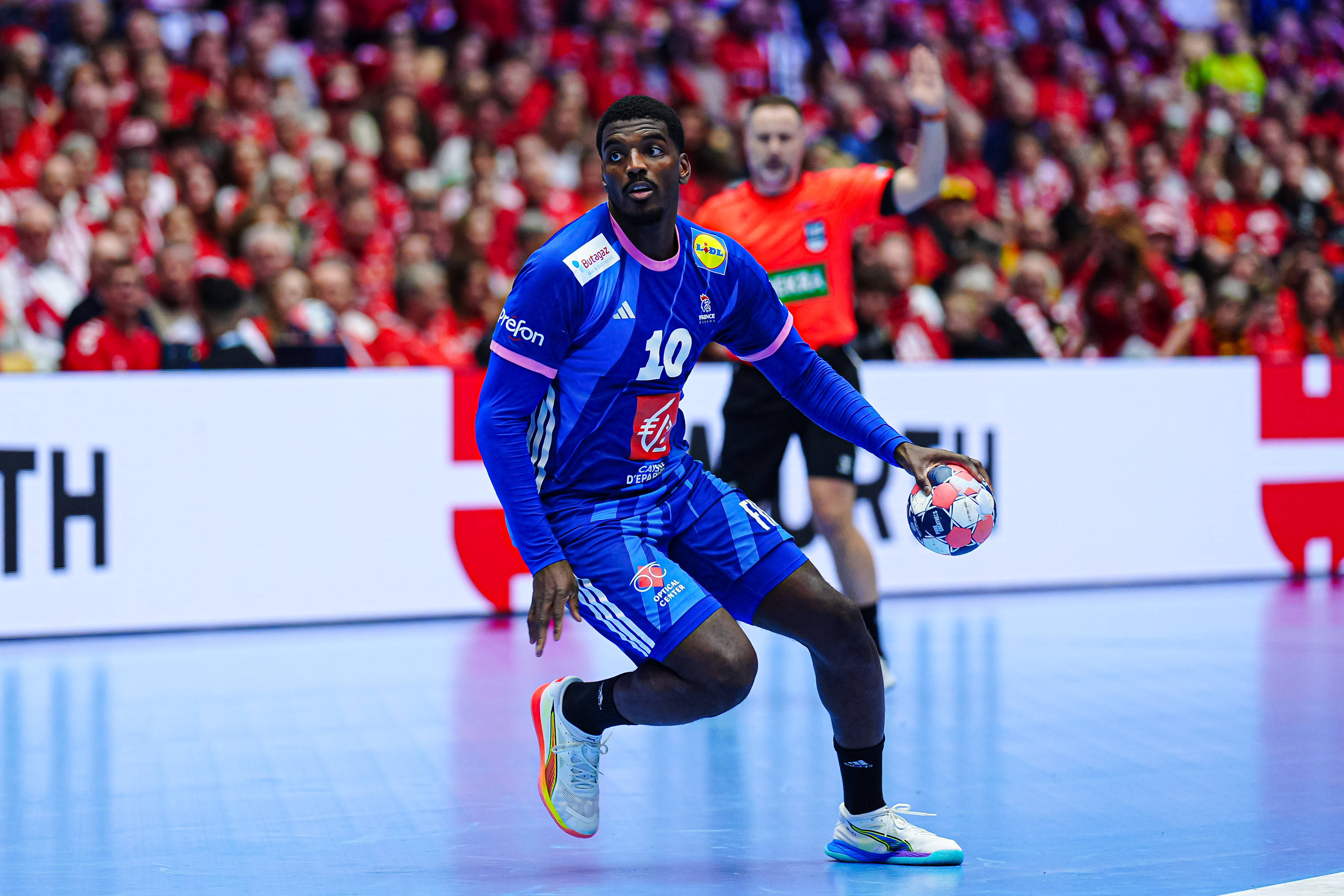
Nedim Remili gives the French attack another layer. Left-handed, tactically sharp and comfortable both at centre back and right back, he is the kind of player who can read a defence and punish the smallest mistake. With Mem often operating on the right, Remili regularly takes over as the brain of the back-court unit, pulling the strings in the middle and deciding when France accelerate and when they settle into structure. It is a role he also knows well from club handball at Veszprém.
Together, these players form the spine of a French side that is no longer living off memories, but pushing for the next big statement. They have already celebrated major titles, but now they are being asked to lead from the front. The EHF EURO 2026 did not unfold the way France had imagined, yet that only adds fuel to the mission. In January 2027, Les Bleus will attack again – with fresh energy, fresh responsibility and a new voice on the bench.
A big-name coach for a team with big ambitions
A seventh-place finish at the EHF EURO 2026 was nowhere near the French standard, and the consequences followed quickly. [Guillaume Gille]() accepted responsibility and stepped down in February 2026. The federation reacted fast and made a statement of its own by appointing Talant Dujshebaev as the new head coach – a heavyweight name in international handball and a clear signal that France intend to be back in the medal fight.
In handball terms, the name Talant Dujshebaev carries serious weight. Younger fans may know him first and foremost as a coach, and also as the father of Alex and Daniel Dujshebaev, but his playing career already placed him among the sport’s biggest names. Born in Kyrgyzstan, he was named World Player of the Year in 1994 and 1996 and built a reputation as one of the defining back-court stars of his era.
At international level, he first represented the Soviet Union before later playing for Spain, earning over 100 caps across both teams. His club career took him to some of Europe’s top teams:
- CSKA Moscow (1987–1992)
- TEKA Santander (1992–1997)
- TuS Nettelstedt-Lübbecke (1997–1998)
- GWD Minden (1998–2001)
- BM Ciudad Real (2001–2007)
During the final stretch of his time in Ciudad Real, Dujshebaev was already balancing life on court and life on the bench. After retiring as a player, he committed fully to coaching and stayed with the club until its bankruptcy in 2013. He later continued his work with the Polish powerhouse Kielce and built further on a coaching résumé packed with elite-level experience. He has also had spells with the national teams of Hungary and Poland.
Success has followed him almost everywhere. As a player, he collected major international medals and a World Championship title. As a coach, [Talant Dujshebaev]() has reached the EHF Champions League final on eight occasions and lifted the trophy four times – a record that underlines exactly why France turned to him for this new phase.
Now the challenge is clear: bring France back where France believe they belong. His first major tournament in charge will be the 2027 IHF Men’s World Championship on German soil, and the expectation around this team is obvious – they are not travelling to make up the numbers, they are travelling to fight for the podium.
A nation built on winning habits
Few nations in men’s handball carry the same aura as France. The medal count alone tells the story: 24 podium finishes at major tournaments, including 13 gold medals. That is not just success – that is a culture of winning, built over decades and reinforced generation after generation.
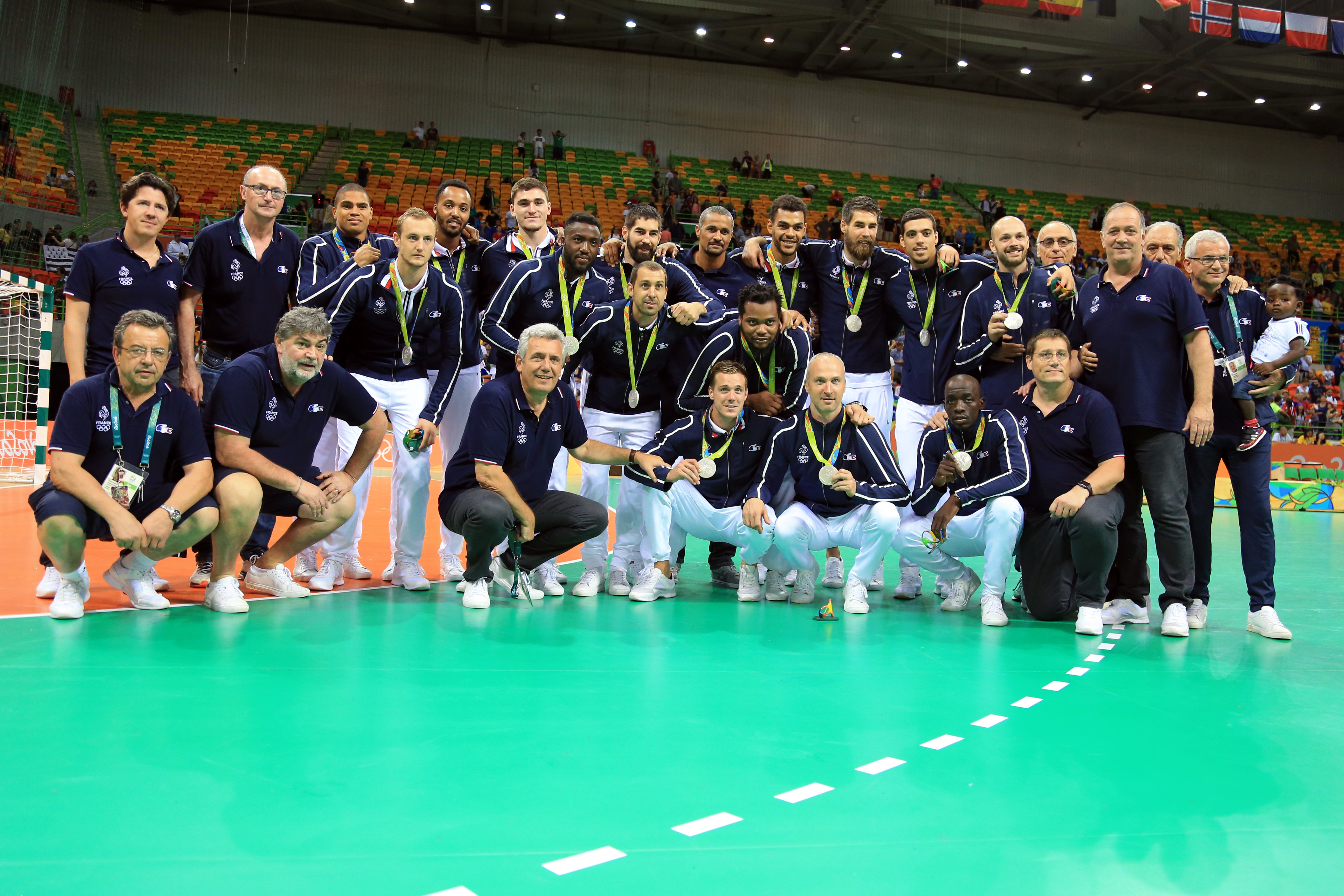
The Olympic story began with bronze in Barcelona in 1992. Then came the years that turned French handball into a global force: gold in 2008 and 2012, silver in 2016 and another gold at Tokyo 2020. Time and again, France have shown they can handle the pressure when the stakes are at their highest.
At the World Championships, France has consistently been among the top teams since 1993:
- Silver: 1993
- Gold: 1995
- Bronze: 1997
- Gold: 2001
- Bronze: 2003, 2005
- Gold: 2009, 2011, 2015, 2017
- Bronze: 2019
- Silver: 2023
Bronze: 2025
The European Championship has historically been more challenging due to its format. France’s first title came in 2006, followed by further gold medals in 2010, 2014 and 2024. The team also secured bronze in 2008 and 2018.
Allez, allez en direction de Cologne
France never walk into a tournament quietly. The standards inside this team are enormous, shaped by decades of medals, finals and championship runs. Under Talant Dujshebaev, that ambition is unlikely to soften. If France hit their rhythm, the big target is obvious: the final weekend in Cologne and the bright lights of the LANXESS Arena.
The route there, however, has not been the most straightforward. After that disappointing EURO finish, France had to come through the European qualification play-offs, where they beat Czechia across two legs to punch their ticket to Germany. It was not the glamorous route, but it was a reminder that even a giant sometimes has to battle the hard way.
Now the next key moment is approaching fast: the draw on 10 June 2026 in Munich, when the preliminary round picture will finally take shape. From there, the countdown really begins.
France have been assigned to Group D and, once qualified, were seeded for Stuttgart for the preliminary round. If Les Bleus come through as expected, the next stop will be Cologne – and from a French point of view, that is exactly where a tournament like this should start to get really exciting. Tickets for the matches in Stuttgart you can get here.
Images: Eibner/Pillaud