

On 13 January 2027, the time has come again: the IHF Men’s Handball World Championship kicks off in Germany. It will already be the 30th edition of the indoor tournament. A perfect moment to take a look back at the history of the competition. How did it all begin? What has changed over the years? And which curious stories remain unforgettable to this day?
Every beginning is difficult
5 February 1938 is a historic day in handball history. On that Saturday, the first match of a World Championship was played in Berlin. Four teams took part in the tournament organised by the International Amateur Handball Federation (IAHF):
- Denmark
- Germany
- Sweden
- Austria
The teams competed in a round-robin format to determine the world champion. In the end, Germany finished top of the podium.
Just five months later, another “first” took place: the first field handball World Championship, also hosted by Germany. The key difference was the playing surface. From 7 to 10 July 1938, matches were played on grass. Another major difference was the number of players: eleven-a-side outdoors versus seven-a-side indoors. Once again, Germany triumphed, defeating Switzerland in front of 30,000 spectators.
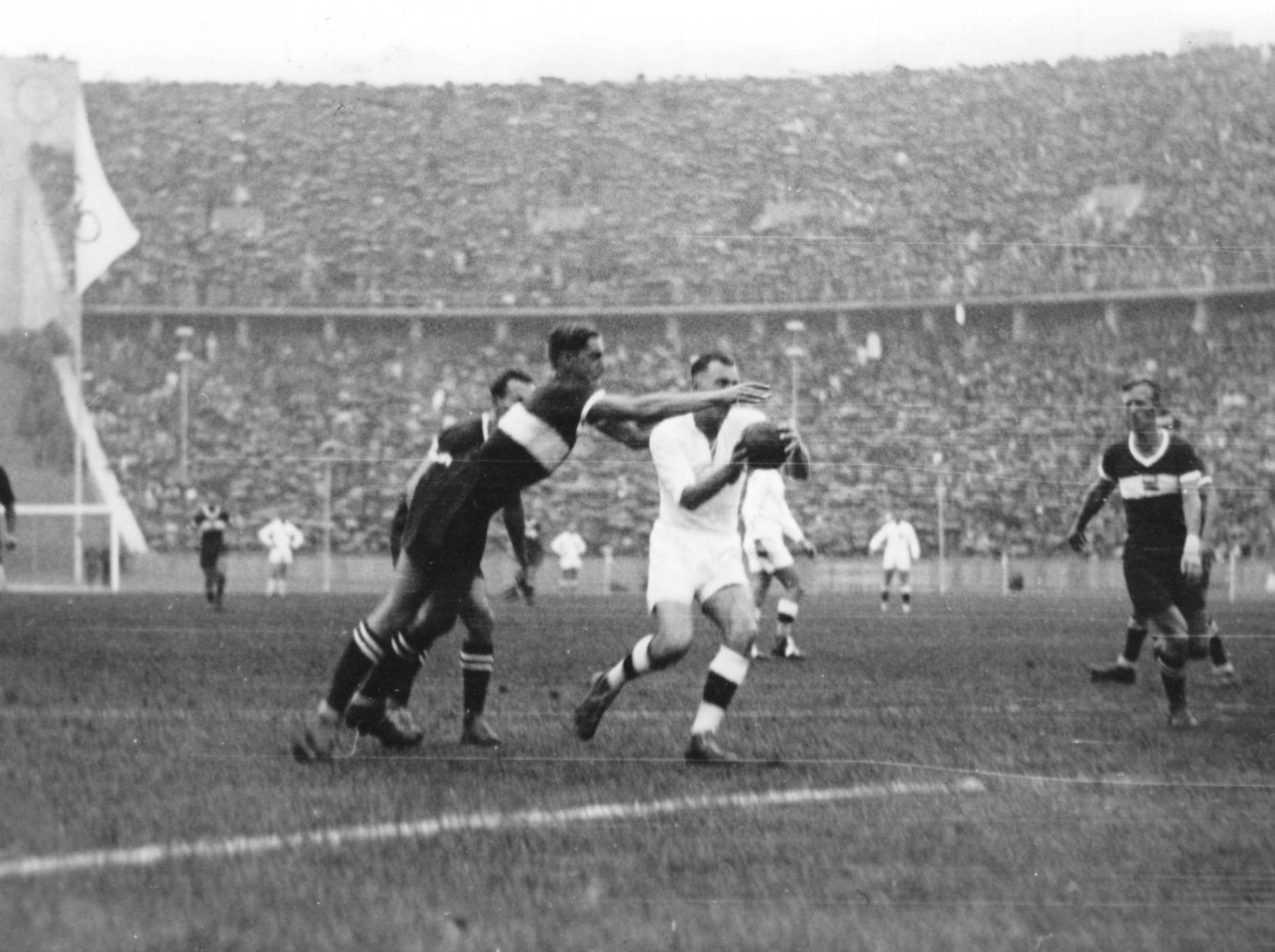
However, these two tournaments remained the only editions for the time being. With the outbreak of World War II in 1939, international competition came to a halt.
Field handball: seven tournaments – three champions
In 1948, handball returned. The newly founded International Handball Federation (IHF) organised the next field handball World Championship. Sweden claimed the title – their only one on grass.
The following five tournaments were all won by German teams:
- 1952 – West Germany
- 1955 – West Germany
- 1959 – United German team
- 1963 – East Germany
- 1966 – West Germany
Despite this dominance, inconsistency defined the era. The tournament schedule varied between three and four years, and formats changed frequently – from round-robin systems to knockout stages. These inconsistencies would remain a feature of World Championships for years to come.
New surface – same challenges
Indoor handball fans had to wait 16 years for the next World Championship, which took place in 1954. Six teams competed, with Sweden once again claiming the title.
From then on, indoor handball gained popularity while field handball gradually faded away. The last field handball World Championship was held in 1966. From that point, the IHF focused entirely on the indoor game.
However, familiar problems remained: there was no fixed tournament cycle. Until 1993, World Championships were held every three or four years. With the introduction of the European Championship in 1994, the IHF and EHF established a coordinated schedule: World and European Championships alternate annually – a system still in place today.
More teams, but no fixed format
Another major challenge was the tournament format. Over the years, the IHF repeatedly adjusted the system, largely due to the increasing number of participating teams. From 12 teams in 1964, the number rose to 16, then to 24 in 1995, and finally to 32 teams since 2021.
Early formats consisted of preliminary, main and final rounds. Later editions introduced knockout stages, placement matches and varying group systems.
Since 2001, the format has combined group stages with knockout rounds. In 2007, the President’s Cup was introduced, allowing teams eliminated in the preliminary round to compete for final rankings.
Since 2021, the format is as follows: 32 teams compete in eight groups of four. The top three teams in each group advance to the main round, while the bottom teams compete in the President’s Cup for places 25–32. The main round consists of four groups of six teams, with the top two advancing to the knockout stage starting from the quarter-finals.
An overview of the full match schedule for the IHF Men’s World Championship 2027 is available here.
From Europe to the world
The 2027 tournament in Germany will mark the 30th edition of the competition. From just four teams in 1938, the tournament has grown to 32 participants. Around half of them are European – and historically, they have dominated the competition. No non-European team has ever won the World Championship.
France leads the all-time medal table with an impressive record:
- 25 appearances
- 13 medals
- 6 gold
- 2 silver
- 5 bronze
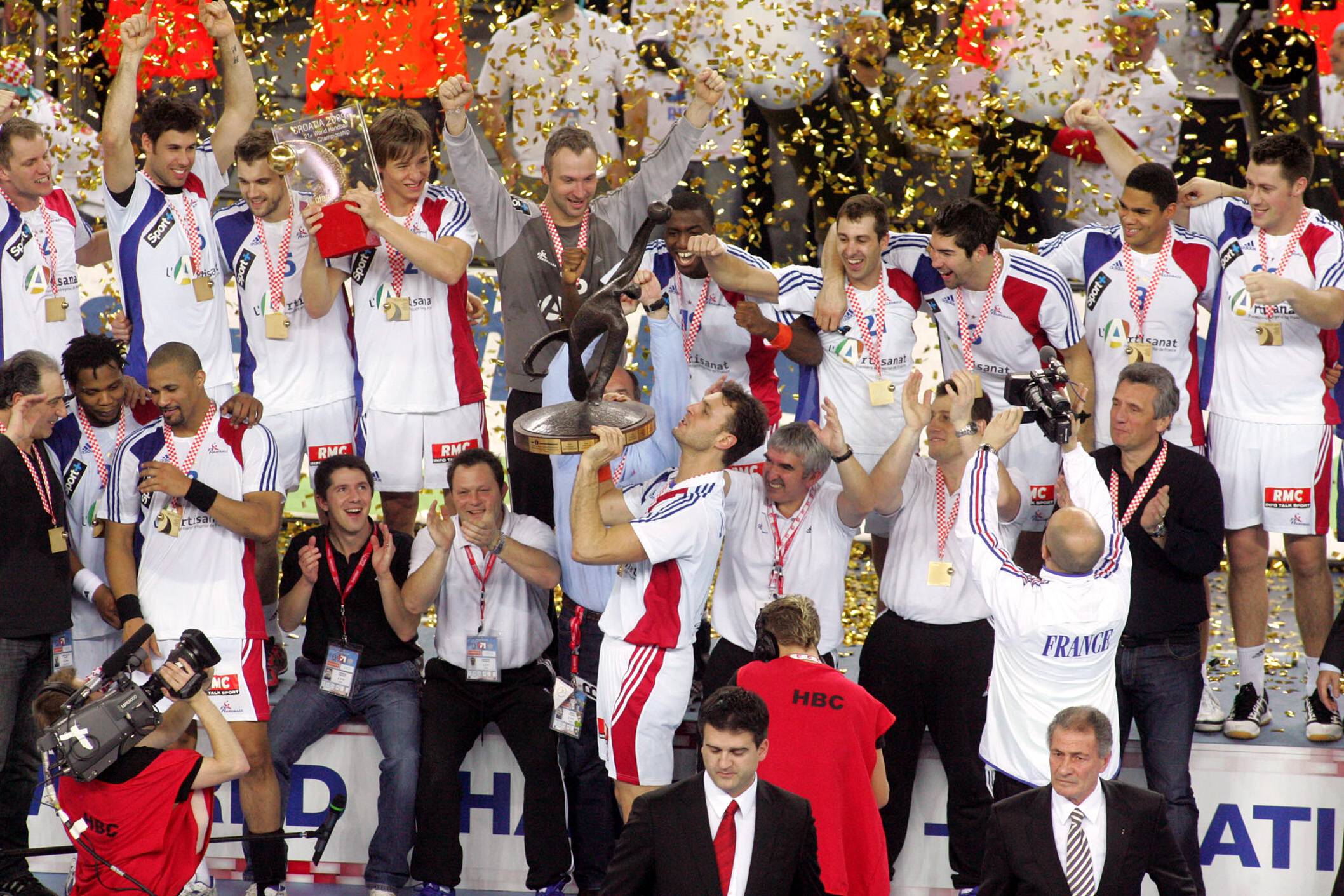
They are followed by Sweden, Denmark and Romania, whose success dates back to the 1960s and 1970s. The only non-European team to reach the podium is Qatar, which won silver on home soil in 2015.
A look at host nations also highlights Europe’s dominance: of 30 tournaments, only five have been held outside Europe. Japan hosted the first in Asia in 1997, followed by Egypt in Africa in 1999. Both tournaments were uniquely held in summer. Additional editions outside Europe took place in Tunisia (2005), Qatar (2015) and Egypt (2021).
Germany is the record host, with 2027 marking its eighth tournament. Joint hosting, introduced in 2019 (Germany/Denmark), has since become more common and will continue in future editions.
A stage for the sport’s superstars
Mathias Gidsel, Felix Claar, Francisco Costa and Andreas Wolff are among the stars of today’s game. Fans flock to arenas to see them live, collect autographs or take photos. The World Championship offers the perfect stage for these global stars.
Since 1990, the IHF has awarded the MVP of the tournament, with Jackson Richardson being the first recipient. The All-Star Team was introduced in 1993 to honour the best players in each position.
Interestingly, one of the sport’s greatest players never made an All-Star Team: Daniel Stephan. Due to injuries, the 1998 World Player of the Year never played a single World Championship match – making him the only world player with that distinction.
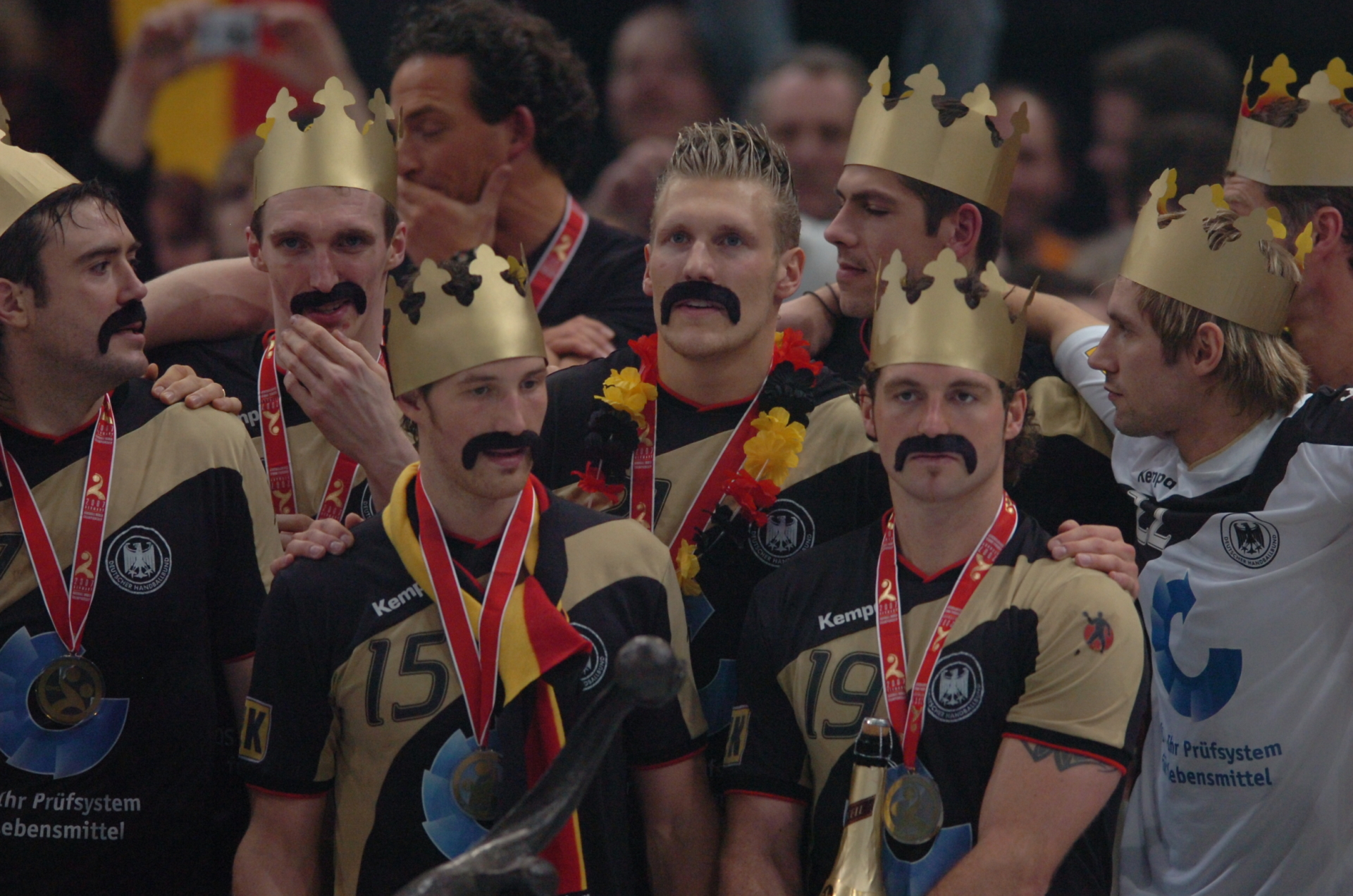
Germany’s 2007 title on home soil also produced one of the most iconic moments in tournament history: after defeating Poland in the final, the German players celebrated with fake moustaches in honour of their coach Heiner Brand.
Qatar changes the game
The 2015 World Championship in Qatar remains one of the most controversial tournaments. The hosts achieved their greatest success, winning silver after losing the final to France 22:25.
However, many key players were not born in Qatar: Rafael Capote (Cuba), Danijel Šarić (former Yugoslavia) and Žarko Marković (Montenegro) were all naturalised ahead of the tournament. The strategy sparked debate but proved effective.
Even more unusual were the fans: reports suggested that supporters from Southern Europe were paid to cheer for Qatar, only to support their home countries the following day.
Qatar also introduced a new trophy design, replacing the traditional “throwing arm” with a more modern and glamorous cup.
The trophy itself has its own remarkable story: in 2017, it was carried to the summit of Mont Blanc as part of a promotional campaign for the World Championship in France – with former international player Guillaume Gille proudly holding it aloft.