


The IHF Men’s World Championship is the biggest stage in international handball. Next January, fans from all over the world will once again travel to Germany to support their stars. And it is not only off the court that different cultures will meet. Coaching philosophies, the physical and athletic profile of the players and the values within each team all have a major influence on the style of play and overall identity. Group H of the IHF Men’s World Championship 2027 brings together four particularly different approaches.
Physicality Meets Speed
Handball is currently undergoing a tactical shift. More and more teams are relying on smaller, faster players. Twenty years ago, the trend was very different. Teams often favoured tall, powerful players who could score from distance or use their physical superiority at the line.
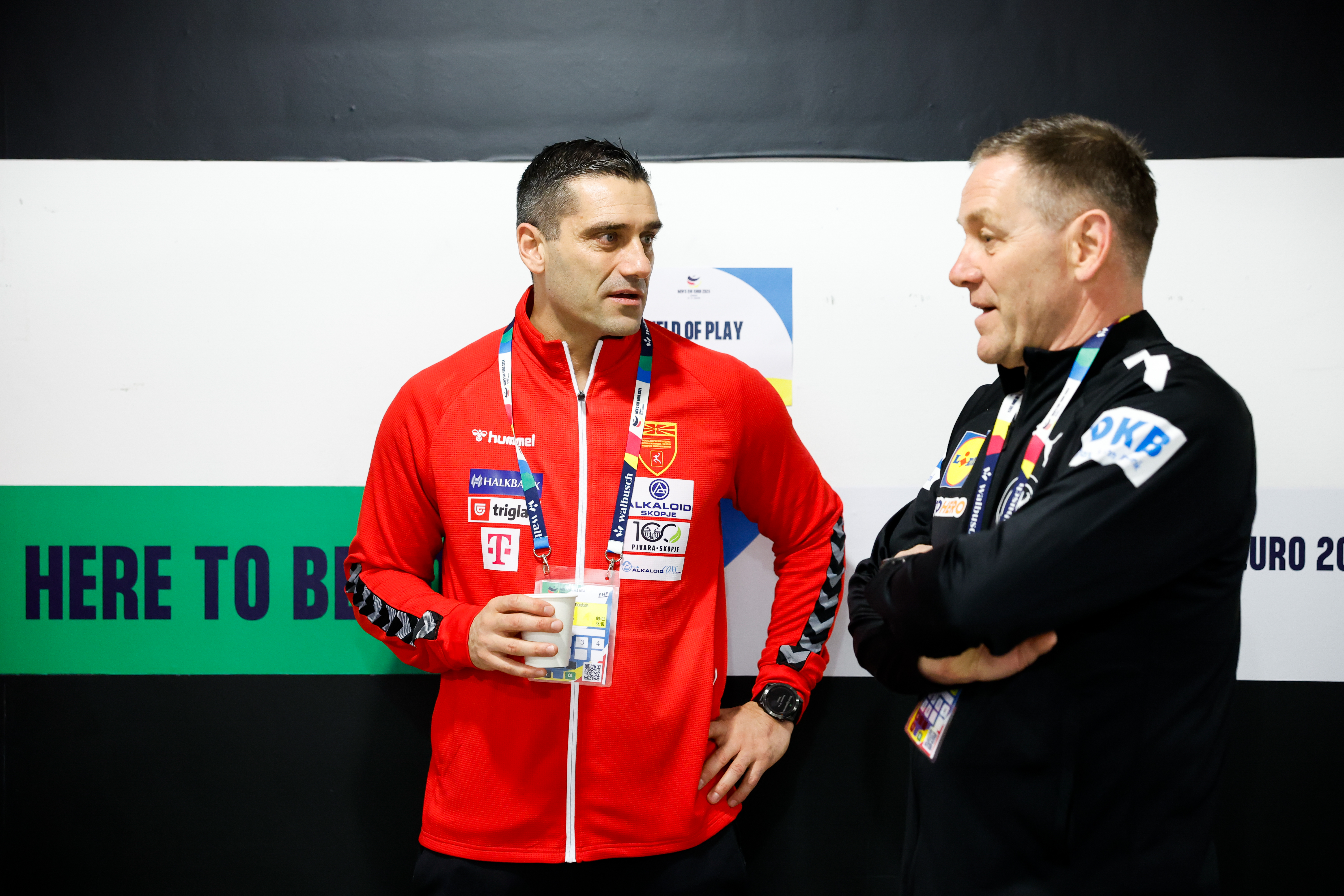
One of the best backcourt players of that era was Kiril Lazarov. He is now head coach of the North Macedonian national team, and his philosophy reflects that more traditional approach.
A look at the squad from the EHF EURO 2026 illustrates the point: the team’s average height was 191.8 centimetres, making North Macedonia one of the tallest sides in the tournament.
But the team stands out not only for its height, but also for its physical presence. Line players Žarko Peševski, Mihail Alarov and Marko Sotjkovikj all weigh at least 110 kilograms, making them extremely difficult to defend at the line. All three fit perfectly into Lazarov’s system.
The key player, however, is someone else. Filip Kuzmanovski is the leader of the team. The 1.98-metre playmaker is Lazarov’s extended arm on the court. He has fully absorbed his coach’s ideas, regularly making an impact with long-range goals or intelligent passes to the line. North Macedonia will once again rely on those qualities in January 2027.
Japan takes the opposite approach:At the World Championship 2025, Japan was one of the smallest teams in the tournament, with an average height of just 184.2 centimetres. Head coach Toni Gerona therefore relies heavily on the speed of his players.
The Japanese are quick on their feet, strong in one-on-one situations and dangerous in transition. In recent years, however, major success on the biggest stage has been limited. Their last appearance in the Main Round of a World Championship came in 2021, when they ultimately finished 19th.
Japan has been much more successful at the Asian Championships. The team reached the semi-finals in both 2024 and 2026. In 2024, they defeated Bahrain to reach the final before losing to Qatar. Two years later, Bahrain gained revenge in the semi-finals, leaving Japan with fourth place.
At the World Championship in January 2027, Japan will have another chance to settle the score. The two teams meet again in the preliminary round, and a victory would likely put Japan ahead of their continental rivals in the race for the Main Round.
That is exactly what Bahrain head coach Robert Hedin will be determined to prevent.
The Swede took over the national team in May 2025. Before that, the former Swedish international worked for a wide range of clubs around the world:
Over the course of his long career, Hedin has experienced many different handball cultures and now brings those influences into the Bahraini team.At the last World Championship, Bahrain was the smallest team in the tournament with an average height of 182.6 centimetres. Like Japan, they relied heavily on speed.
After a disappointing tournament, however, the team finished only 29th. Hedin and his coaching staff therefore had to find ways to compete more effectively against physically superior opponents, which was very successful.In January 2026, Bahrain dethroned Qatar at the Asian Championship and won the continental title for the first time. That success could provide crucial momentum ahead of the challenges in Group H.
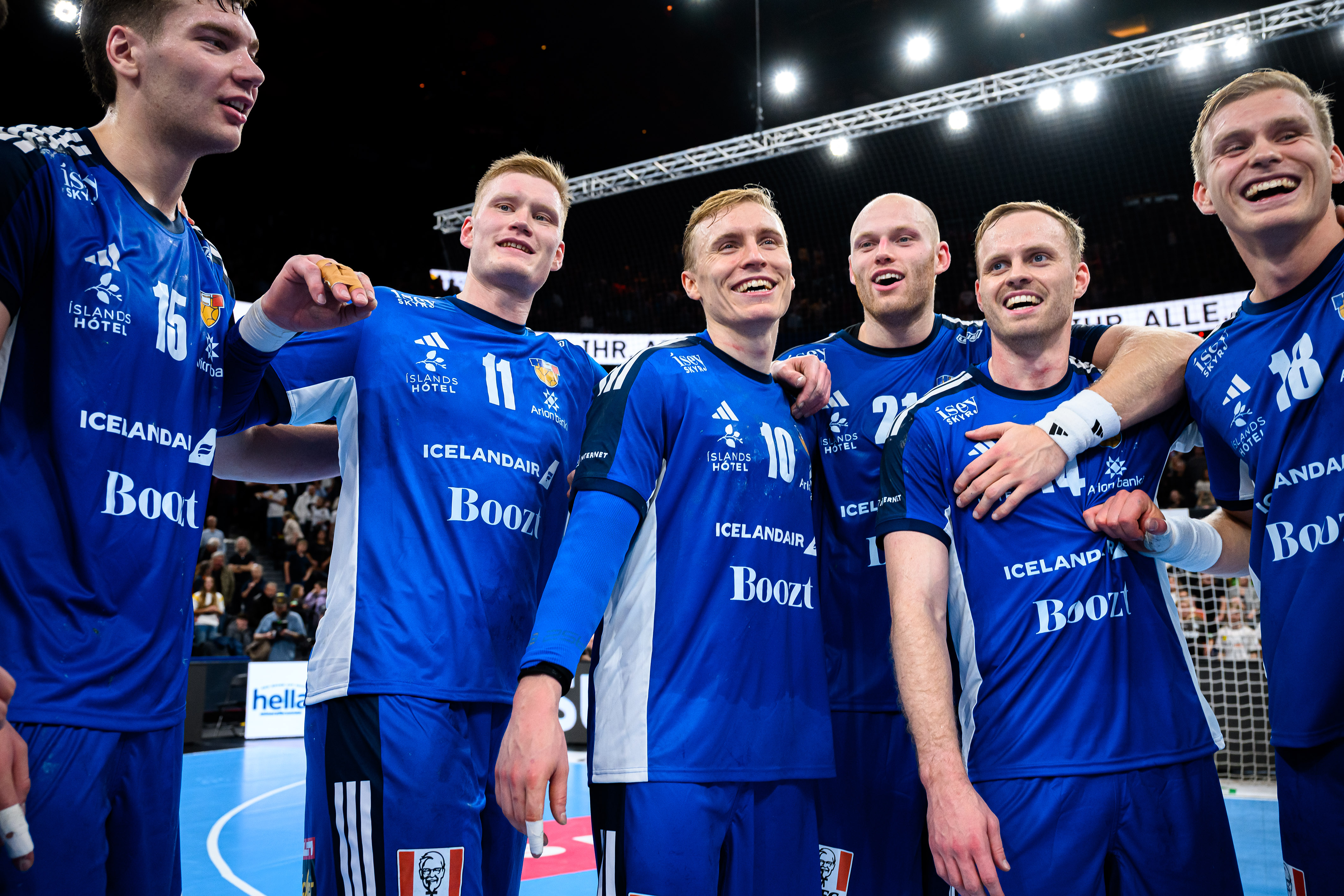
Iceland will also travel to Magdeburg full of confidence.At the EHF EURO 2026, Snorri Steinn Guðjónsson’s team reached the final four of a major international tournament for the first time in 16 years.
What makes Iceland particularly interesting is the way they combine both traditional and modern approaches.With Gísli Kristjánsson and Ómar Ingi Magnússon, they possess two outstanding one-on-one specialists who are extremely difficult to stop. At the same time, line player Arnar Freyr Arnarsson and backcourt player Leó Gunnarsson both stand over two metres tall – a challenge for the opponents defenders.This gives head coach Guðjónsson the flexibility to switch between different styles and continually present opponents with new challenges.
In addition to their tactical versatility, Iceland also boasts considerable individual quality. Numerous players represent top clubs across Europe. Kristjánsson, Magnússon and Elvar Örn Jónsson even play for SC Magdeburg.For them, the preliminary round matches will almost feel like home games.
Thanks to their individual quality and tactical flexibility, Iceland is among the contenders to reach the final weekend in Cologne from 29 to 31 January. Before then, however, they must first overcome their three Group H rivals.
Another Knockout Battle Between Bahrain and Japan?
Iceland begins its campaign against Bahrain. The two teams meet on Friday, 15 January at 8:30 pm. Earlier that evening, North Macedonia and Japan open the group at 6 pm in what will provide the first indication of how the battle between speed and physicality may unfold.
A clearer answer could come two days later.At 6 pm, North Macedonia will look to use its physical superiority against Bahrain’s quick and mobile team. At 8:30 pm, Iceland and Japan close the second matchday.
The third and potentially decisive matchday follows on 19 January.Japan and Bahrain meet at 6 pm. If both teams lose their opening two matches, the clash would effectively become a knockout game for a place in the Main Round.
In that scenario, the following match between Iceland and North Macedonia at 8:30 pm would also become decisive. Both teams may already be qualified for the Main Round, but first place in the group would still be at stake.
GETEC Arena – Home of the German Champions
The different tactical approaches are not the only thing that promises excitement. The fixture list itself offers plenty of drama.The players, meanwhile, can look forward to competing in one of Germany’s most famous handball arenas.
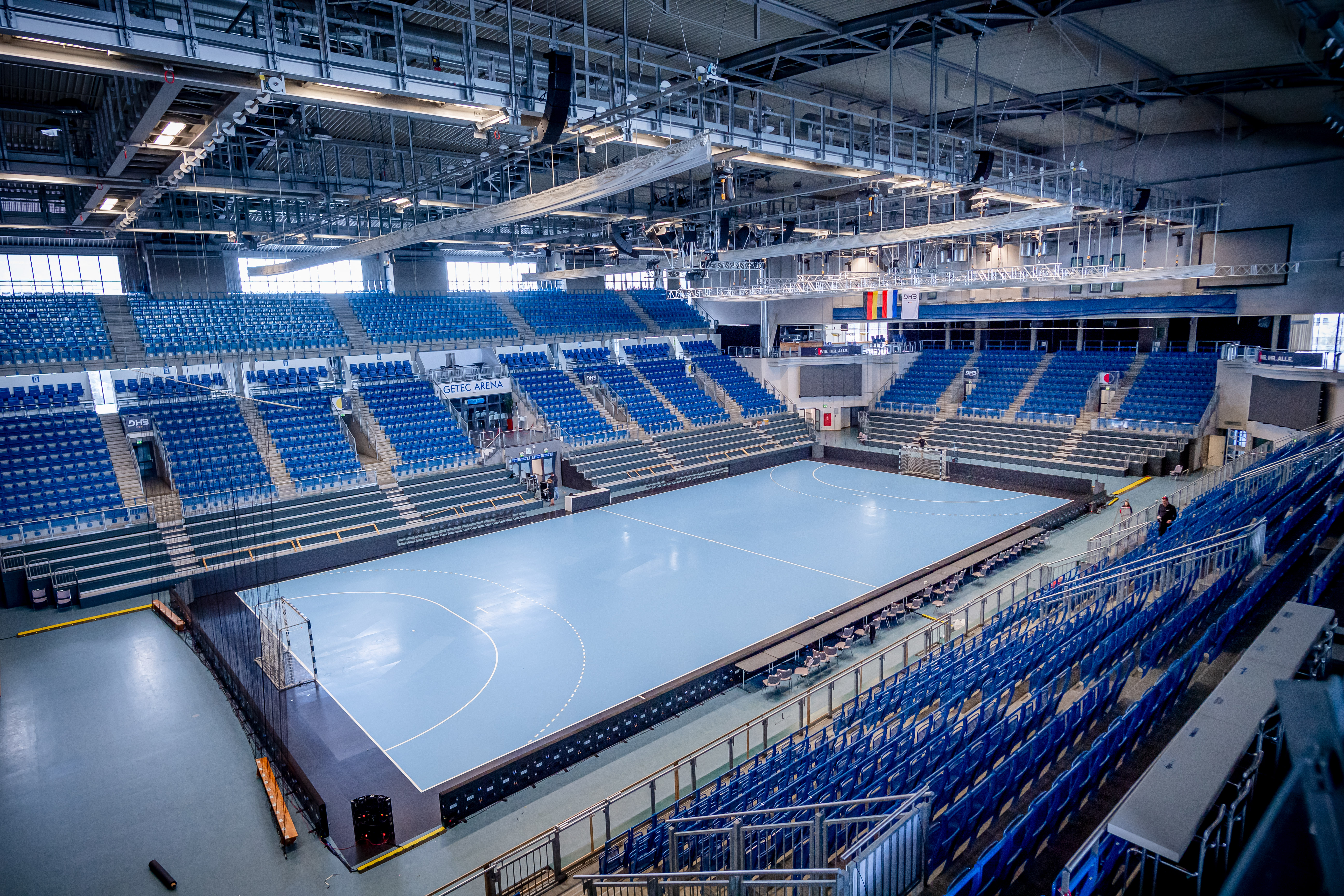
Just like Group F, all Group H matches will be played at the GETEC Arena in Magdeburg.The arena is home to SC Magdeburg, one of the most traditional and successful clubs in German handball. Their trophy collection underlines that status:
- 11 East German Championships
- 4 East German Cups
- 4 German Championships
- 3 DHB Cup titles
- 3 EHF Champions League titles
- 2 European Champions Cup titles
- 3 EHF Cup titles
- 3 IHF Super Globe titles
For many players, simply stepping onto the court in the home arena of one of the world’s most successful clubs is a dream.
In 2027, that dream will come true for the players of North Macedonia, Iceland, Bahrain and Japan.
An even bigger dream, of course, would be to win there. In the end, which teams manage to do so may depend just as much on their tactical approach as on their individual quality.