


The biggest event in international handball is almost here: the IHF Men’s World Championship. From 13 to 31 January 2027, Germany will host the tournament’s 30th edition. The participating teams, host cities and tournament schedule have all been confirmed, and anticipation among fans continues to grow. After all, they will have the opportunity to watch the biggest stars of the sport live across six arenas in Germany.
Among the tournament’s biggest attractions is undoubtedly the French national team. Once again, Les Bleus will be among the favourites for the world title. But before they can think about lifting the trophy, a challenging preliminary round in Stuttgart awaits. Time to take a closer look at Group D.
A Star-Studded Squad, South American Rivals and an Emerging Outsider
On paper, the hierarchy in Group D appears straightforward. France enters as the clear favourite to top the group. For decades, they have been among the strongest contenders for every major title and possess one of the richest trophy cabinets in international handball.
Much of that success, however, belongs to the past. The dominance that defined the 2010s has gradually faded. France last stood on top of the World Championship podium in 2017, led by legends such as Nikola Karabatić, Thierry Omeyer and Daniel Narcisse.
Ten years after their most recent world title, France is determined to return to the top of the podium. The quality is certainly there. Nedim Remili, Ludovic Fabregas and Dika Mem are all regarded among the very best in their respective positions and have formed the backbone of the team for several years.
There is also a new face on the bench. Talant Dujshebaev took over as head coach in February 2026 and is expected to provide the final piece of the puzzle in France’s pursuit of a record-extending seventh World Championship title.
Standing in their way are two of South America's strongest handball nations.
Argentina and Brazil have dominated South American handball in much the same way France once ruled Europe. Since the introduction of the South and Central American Championship in 2020, the continental title has been shared exclusively between the two rivals. Brazil lifted the trophy in 2022 and 2024, while Argentina triumphed in 2020 and 2026.
Their encounters are regularly decided by the finest of margins. None of their recent meetings has been settled by more than three goals, promising another thrilling showdown next January in Stuttgart’s Porsche-Arena.
Yet the excitement extends well beyond their direct rivalry.
Both nations have also impressed on the World Championship stage in recent years. Argentina achieved its best-ever finish in 2021, placing eleventh after famously defeating Croatia. In the end, they missed out on the quarter-finals by just a single goal.
For many years, Diego Simonet was the face of Argentine handball. Following the recent retirement of the experienced playmaker, all eyes will be on who steps forward to lead the team at the IHF Men’s World Championship 2027.
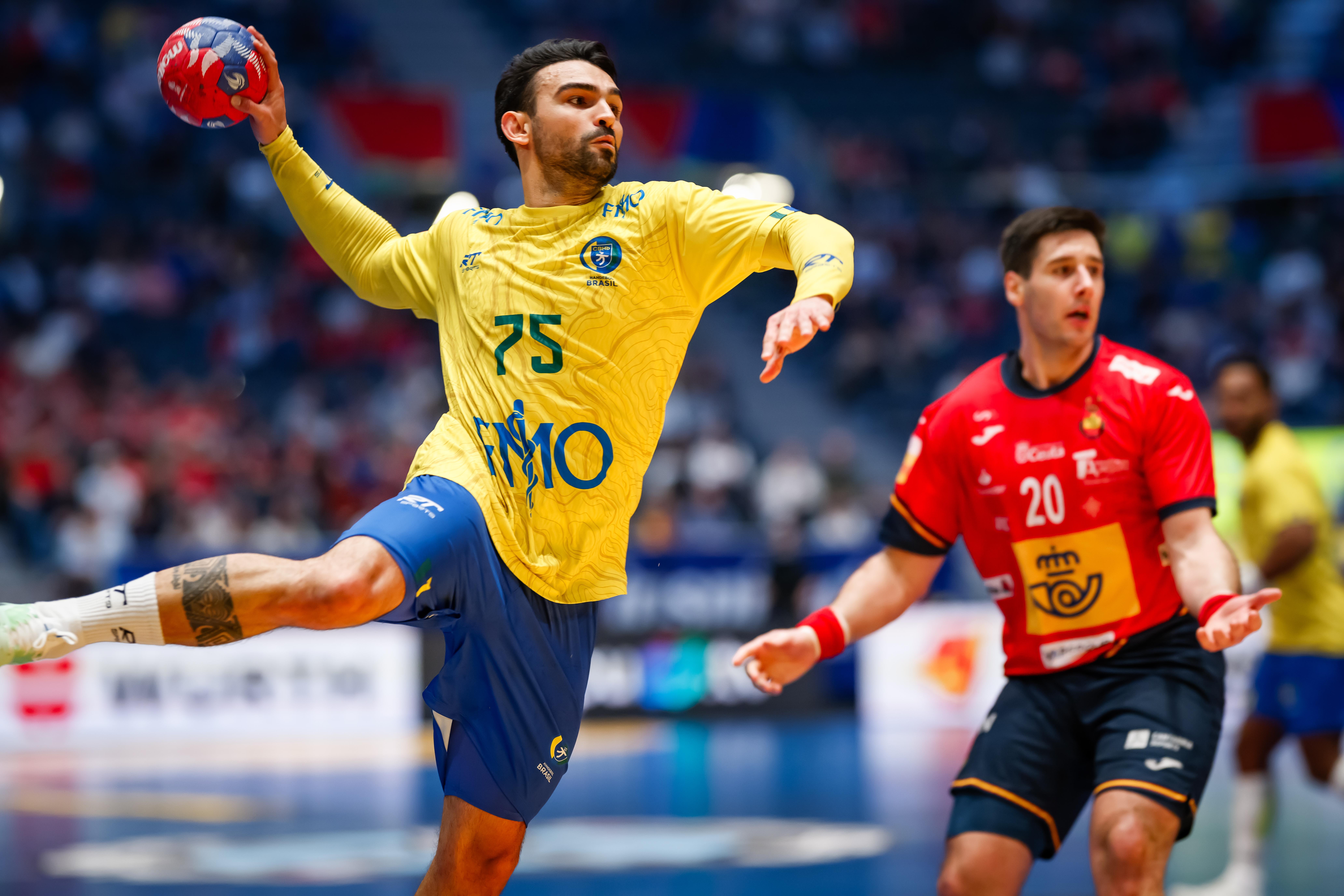
Brazil, meanwhile, demonstrated just how dangerous it can be at the 2025 World Championship.
Led by line player Rogério Moraes and powerful backcourt players Bryan Monte and Haniel Langaro, Brazil enjoyed one of the finest tournaments in its history. Norway, Sweden and Spain all fell to the South Americans before their remarkable run came to an end against eventual champions Denmark in the quarter-finals.
A final seventh-place finish nevertheless marked Brazil’s best-ever World Championship result. Those recent performances should serve as a clear warning to France.
Completing Group D is Kuwait. The Asian side enters the tournament as the group's clear underdog. A victory against any of the other three teams would be one of the the biggest surprises of the preliminary round.
Kuwait’s best World Championship finish came in 1982, when they placed 15th. At the most recent edition in 2025, they finished 28th.
The team has enjoyed considerably greater success at continental level. Kuwait won the Asian Championship in 1995, 2002 and 2004 before returning to the podium with a bronze medal in 2026—its first continental medal in 22 years.
The team now hopes to carry that momentum into the IHF Men’s World Championship in Germany.
South American Rivalry Opens the Group
The opening matchday immediately presents Kuwait with its toughest challenge as the Asians face tournament favourites France on 14 January in Stuttgart’s Porsche-Arena.
Earlier that evening, Argentina and Brazil renew one of international handball’s fiercest rivalries. The encounter promises not only exceptional quality but also plenty of passion, intensity and emotion.
Two days later, France faces its first major test.
Brazil will look to trouble Talant Dujshebaev’s side and once again prove capable of upsetting one of the tournament favourites. The second matchday concludes with Kuwait taking on Argentina, with the South Americans entering the contest as clear favourites.
The same applies to Brazil on the final matchday, when they face Kuwait before the group concludes with the headline clash between Argentina and France.
The exact match schedule has yet to be confirmed. The opening match on each day will begin at either 18:00 or 18:30, followed by the second fixture at either 20:30 or 21:00. An overview of the current match schedule is available here.
A Home-Like Atmosphere for France?
All Group D matches will be played at Stuttgart’s Porsche-Arena.
The home venue of Bundesliga club TVB Stuttgart seats 6,200 spectators and has a long-standing connection to handball. The arena previously hosted matches during the World Championship 2007 and most recently welcomed the German Handball Federation back for the Women’s World Championship 2025.
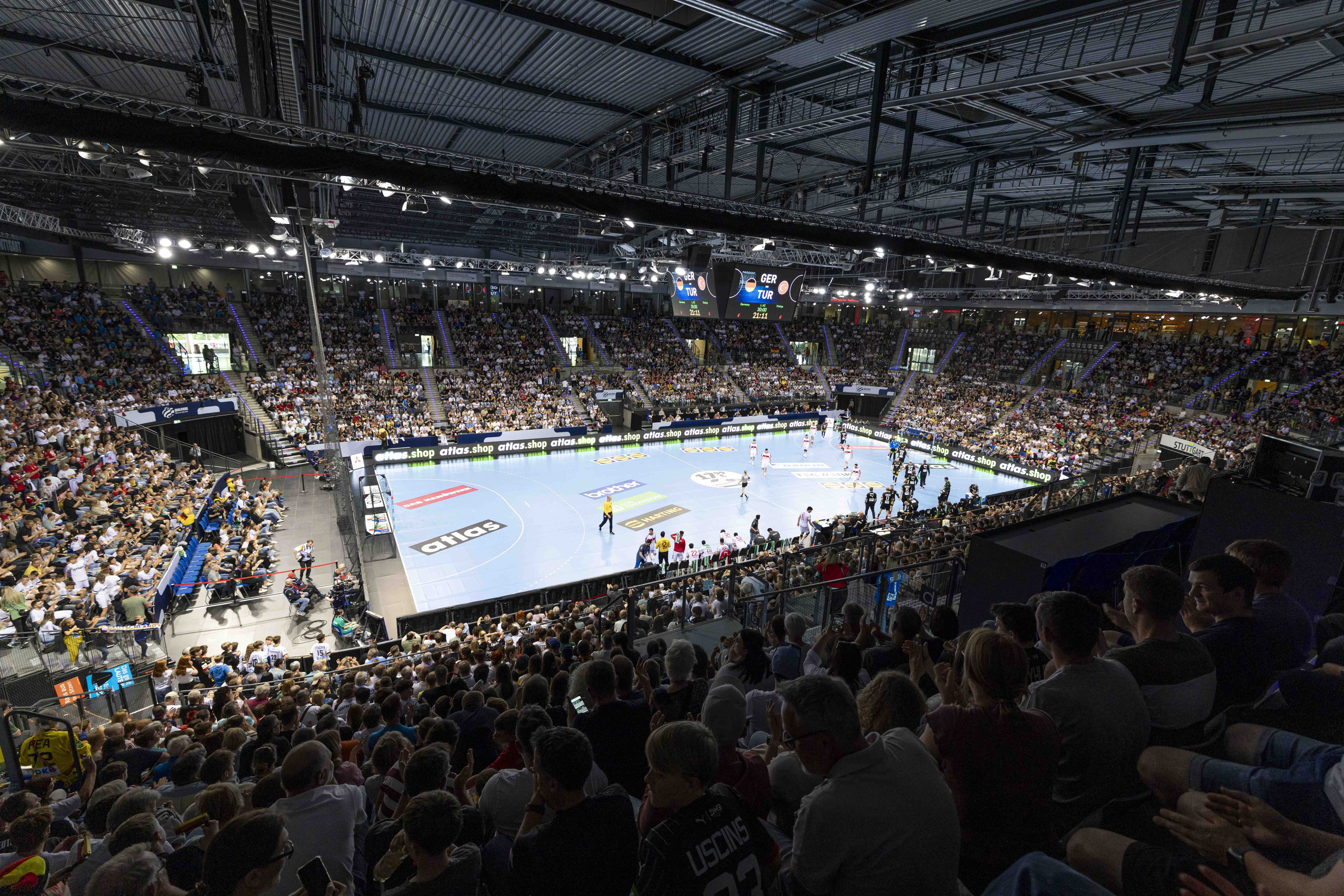
Its sporting heritage extends beyond handball. Located directly alongside the Porsche-Arena are the MHP Arena, home to the soccer Club VfB Stuttgart and the SCHARRena, creating one of Germany’s largest sports complexes.
French supporters, meanwhile, have another reason to look forward to Stuttgart.
France had already been seeded into Group D before the draw, guaranteeing all of its preliminary round matches in the city. The Porsche-Arena is located less than 90 minutes by car from the German-French border, making it an ideal destination for French fans travelling from eastern France.
A large and vocal French contingent could provide a genuine home-court advantage in what promises to be a highly competitive preliminary round.
Images: Marco Wolf/Sasa Pahic Szabo/Kenny Beele